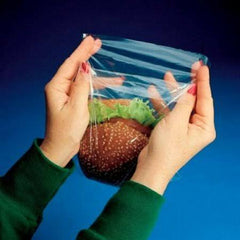
Polypropylene (PP) bags are the clear, glossy, crinkly bags you see on cookies, candy and retail displays. Polyethylene (PE) bags are the softer, stretchier poly bags that do most of the everyday packing work in warehouses. If your product needs to look good on a shelf, buy polypropylene. If it needs to survive handling, weight or cold, buy polyethylene.
That covers most orders. That covers most orders. The rest of this guide explores the details customers commonly need to consider: how each material feels and behaves, what thickness each one comes in, and which bag fits which product.
What Is the Difference Between Polypropylene and Polyethylene Bags?
Both are plastic films, and both get called "poly bags." They behave very differently once you put product in them.
Polypropylene (PP) bags
Polypropylene film is stiff and very clear with a shiny finish. It is the material behind most "cello bags" sold today. When squeezed, it produces a distinctive crackling sound. It holds its shape, which is why a cookie in a PP bag looks neat and crisp instead of slumped.
- Best clarity and gloss of any common bag film
- Stiff, holds a sharp look on a display or peg
- Good moisture barrier for dry foods like cookies, candy and nuts
- Less stretch, so it can split if overstuffed or hit by a sharp corner
- Gets brittle in the cold, so it is a poor choice for the freezer
Polyethylene (PE) bags
Polyethylene film is soft and flexible. Low density (LDPE) poly bags are slightly hazy instead of glass clear, and they stretch before they tear. That flexibility allows PE bags to withstand drops, box corners, and bolts without splitting easily.
- Flexible and forgiving, stretches instead of cracking
- Handles cold storage and freezers well
- Available in a much wider thickness range, from light 0.75 mil up to heavy 6 mil
- Clear enough to see and scan what is inside, but not as sparkling as PP
- The default bag for shipping, storage, kitting and parts
Polyethylene itself comes in a few types, low density, linear low density and high density, and each one acts a little differently. Those differences are explained further in the LDPE vs HDPE guide.
PP vs PE Bags Side by Side
| Feature | Polypropylene (PP) | Polyethylene (PE, low density) |
|---|---|---|
| Clarity | Crystal clear, high gloss | Clear with a slight haze |
| Feel | Stiff, crinkly | Soft, stretchy |
| Puncture and drop resistance | Lower, can split on sharp edges | Higher, stretches before tearing |
| Cold and freezer use | Not recommended | Good |
| Typical thickness we stock | 1.5 mil and 2 mil | 0.75 mil to 6 mil |
| Heat sealing | Yes | Yes |
| Resin code | 5 | 4 (LDPE) or 2 (HDPE) |
| Best for | Bakery, candy, gifts, retail display | Shipping, storage, parts, apparel, bulk packing |
The resin numbers come from the standard plastic coding list, which California spells out in Public Resources Code section 18015: 2 is HDPE, 4 is LDPE and 5 is PP. Whether a bag actually gets recycled depends on local programs. The poly bag recycling guide provides more information about recycling considerations.
When to Buy Polypropylene Bags
Pick PP when the bag is part of how you sell the product. A clear, tight bag makes baked goods and candy look like they came from a nicer shop.
- Cookies, brownies and pastries: flat PP bags like 4" x 6" for a single cookie, 5.75" x 7.75" or 6.75" x 10.75" for a few pieces or a slice of cake.
- Candy, nuts, popcorn and coffee: gusseted PP bags stand taller and hold more volume. A 3.5" x 2.25" x 9.75" bag is a common candy and treat size, and a 4.5" x 2.75" x 10.75" bag holds more.
- Gift and retail items: soaps, candles, jewelry, cards and craft goods look sharper in PP than in PE.
- Party favors and events: close with a bag tie or heat seal and you are done.
If you need a PP bag customers can open and close again, look at Elements Supply's 2 mil reclosable polypropylene bags, from 3" x 5" up to 10" x 12" gallon size. For a tall bag that works well with a twist tie, see our 1.5 mil gusseted polypropylene bags.
Our stock PP bags are made to meet FDA requirements for direct food contact, so they work for bakeries and candy shops packing food straight into the bag.
When to Buy Polyethylene Bags
Pick PE when the bag has a job to do besides look good. If it gets tossed in a bin, packed in a carton, frozen or loaded with something heavy or sharp, polyethylene holds up better.
- Apparel and soft goods: 1 to 1.5 mil flat poly bags for folded shirts and accessories.
- Hardware, screws and small parts: 2 to 4 mil ziplock bags so threads and corners don't poke through.
- Heavy or bulky items: 4 to 6 mil flat bags or poly tubing for metal parts, tools and anything with weight.
- Frozen or refrigerated product: PE stays flexible in the cold where PP can crack.
- Amazon FBA and e-commerce prep: PE bags are the usual choice, and suffocation warning versions are available for the products that need them.
For guidance on selecting the appropriate thickness, the poly bag thickness guide explains 1 mil vs 4 mil with examples.
Common Mistakes Buyers Make
Using PP for heavy or sharp items
A 1.5 mil PP bag looks great with a cookie in it. Put a box of screws or a metal bracket in the same bag and it can split at the seam or the corner. For anything with edges or weight, go to 2 mil or thicker polyethylene.
Using PE where presentation matters
A standard poly bag works fine for a cookie, but next to a PP bag it looks dull. If you sell at a counter, farmers market or retail shelf, the extra clarity of PP is worth it.
Ordering by width only
Both materials are sized width x length, and gusseted bags add the gusset depth in the middle (width x gusset x length). Measure your product with some room to spare. A general recommendation is to add at least 1 inch to the width and 1 to 2 inches to the length so the bag closes cleanly.
Putting PP in the freezer
PP gets brittle when it gets cold. Frozen cookie dough, frozen treats or anything stored cold should go in polyethylene.
FAQ
Is polypropylene better than polyethylene for bags?
Neither is better across the board. Polypropylene is clearer and stiffer, so it is better for display and dry food. Polyethylene is tougher and more flexible, so it is better for shipping, storage, cold and heavy items.
Are cello bags polypropylene?
Most bags sold as "cello bags" today are polypropylene. True cellophane is a different material made from cellulose. Our flat and gusseted cello style bags are high clarity polypropylene.
Are polypropylene bags food safe?
PP bags can be made for direct food contact. Our stock polypropylene bags are made to meet FDA requirements for food contact. Always check the listing for the specific bag you buy.
Can you heat seal polypropylene and polyethylene bags?
Yes, both can be heat sealed with an impulse sealer. Thicker bags need a longer seal time, so test a few before running a full batch.
How can I tell if a bag is PP or PE?
Squeeze it. PP crackles and feels stiff and glassy. PE feels soft and a little waxy and stretches if you pull it. The resin code on the box or label also tells you: 5 for PP, 4 or 2 for PE.
Ready to order? Shop clear polypropylene bags for display and food, or browse Elements Supply's full line of polyethylene poly bags for everything else.